
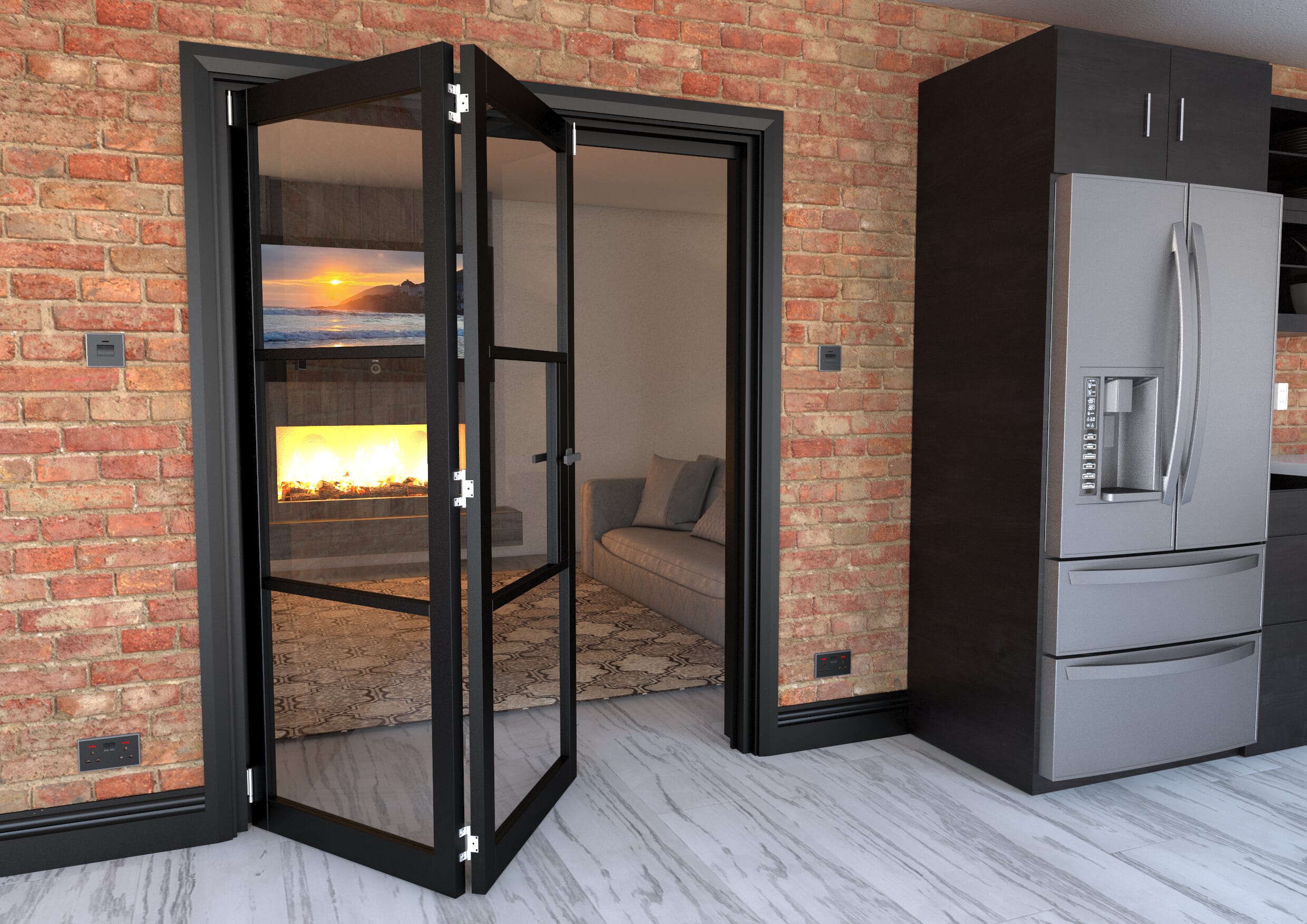




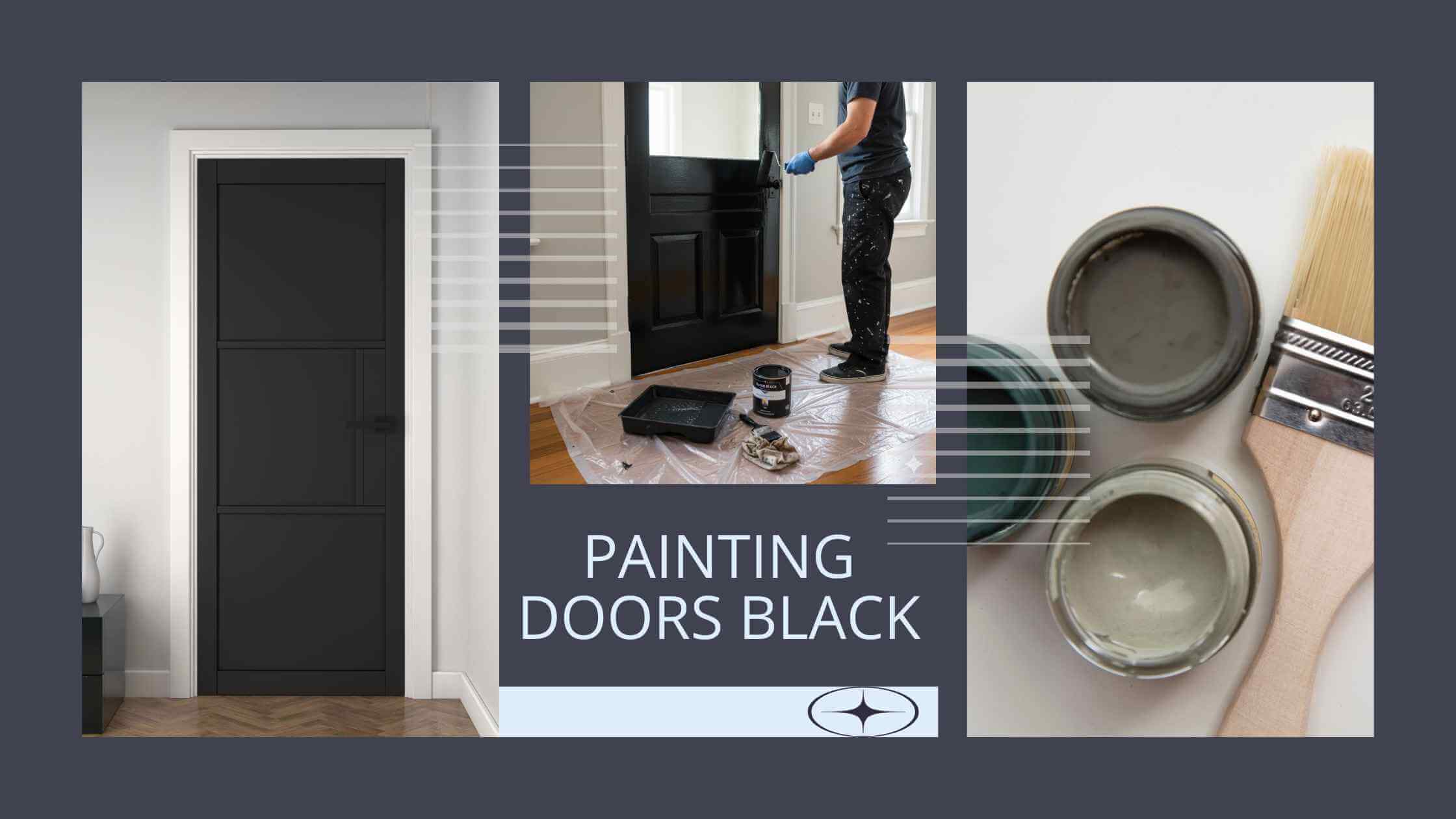
Imagine walking into a room where the crisp lines of a black door quietly command attention. It feels confident, contemporary, and just a little bit daring. For many homeowners, painting an interior door black is one of the simplest ways to bring a touch of drama and sophistication into their space. Yet it’s also a project surrounded by questions.
You can read more about embracing the black door trend in your home if you’re still deciding on whether this colour is right for you.
If you’re ready to “paint it black”, this guide will walk you through everything you need to know, from the “why” to the “how”, so that by the end, you’ll not only have the knowledge but also the confidence to transform your internal doors into striking focal points.
Can you paint interior doors black?
Yes, you absolutely can. In fact, painting internal doors black is a growing trend in modern and traditional homes alike.

While most houses in the UK stick with white woodwork as standard, black offers a bold alternative. It frames your spaces, adds depth to plain walls, and works beautifully with both bright and neutral interiors. Whether you’re updating a primed new door or giving an older one a refresh, black is entirely achievable with the right preparation.
Do I need to prime before painting?
The short answer: usually, yes.
- Black primed doors: If you buy a black primed door, the hardest work has already been done. These come factory-primed in a smooth black coating designed to accept your chosen topcoat without extra fuss.
- Existing painted doors: If your current doors are already painted (say, in white or wood stain), priming helps ensure the new black paint adheres properly and the colour looks rich and even. Without primer, you may find that previous finishes bleed through, or that you need multiple extra coats to achieve the same depth of colour.
Think of primer as the first step to the perfect finish: it creates an even base, so the final finish looks flawless rather than patchy.
When should I paint my interior doors black?
Timing matters less in terms of fashion (black is proving to be timeless) and more in terms of practicality. Here are a few helpful cues:
- During redecorating: If you’re already painting walls, it makes sense to update doors at the same time.
- When light allows: Choose a well-lit day so you can spot imperfections more easily.
- Before fitting hardware: It’s far easier to paint doors before attaching handles, locks, or hinges, though you can always mask them carefully if painting in situ.
What kind of black paint do you use?
For interior doors, durability is key. Doors get handled every day, so a strong finish is essential. Options include:
- Satin or eggshell: Popular for their soft sheen, they’re less reflective than gloss but easier to clean than matte.
- Gloss or semi gloss: High-shine black can look dramatic, but it shows fingerprints and imperfections more readily.
- Water-based paints: These dry quickly, don’t smell as strong, and are easier to clean up. Many modern water-based paints are just as durable as older oil-based options.
Tip: choose a paint marketed specifically for woodwork or trim. These are designed to withstand knocks and frequent cleaning.
Do black doors make a space look smaller?
This is one of the most common worries, but it’s not as clear-cut as it sounds. Dark colours can absorb light, which sometimes makes surfaces appear closer. However, black doors also create crisp definition and visual depth. In practice, black internal doors often make rooms feel larger because they add contrast.
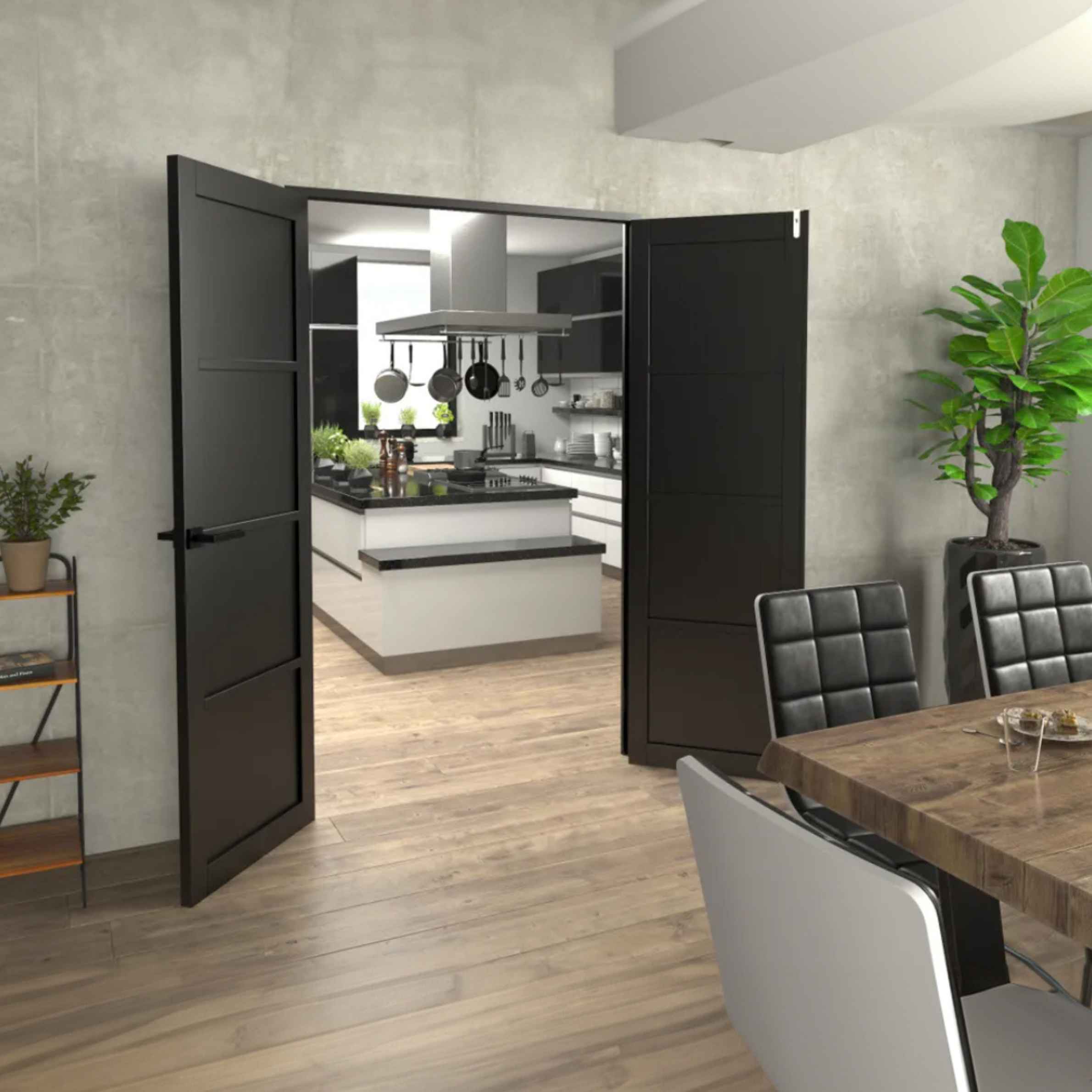
Think of it like wearing a black jacket: it doesn’t make you smaller, but it sharpens the outline
and adds sophistication. Similarly, a black door doesn’t shrink your space, it frames it.
Step-by-step guide to painting your doors black
Now to the practical part. Here’s how to achieve that professional, showroom-quality finish.
What you’ll need:
- Black primer (if starting from bare wood or a light finish)
- Black paint (satin, eggshell, or gloss)
- Sandpaper (120–240 grit)
- Sugar soap or mild cleaner
- Filler (for dents or holes)
- Paintbrush (angled for edges)
- Foam roller (for panels and flat areas)
- Masking tape
- Dust sheet or old sheet
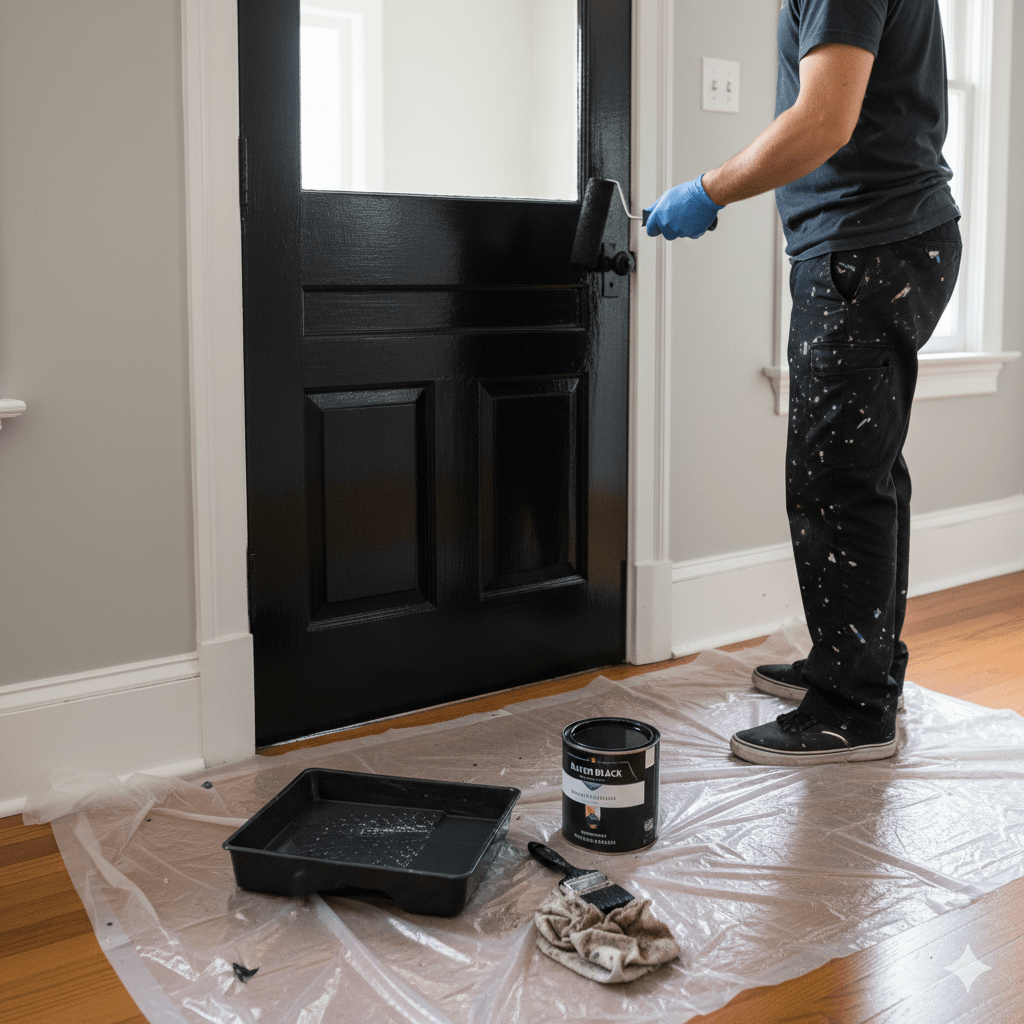
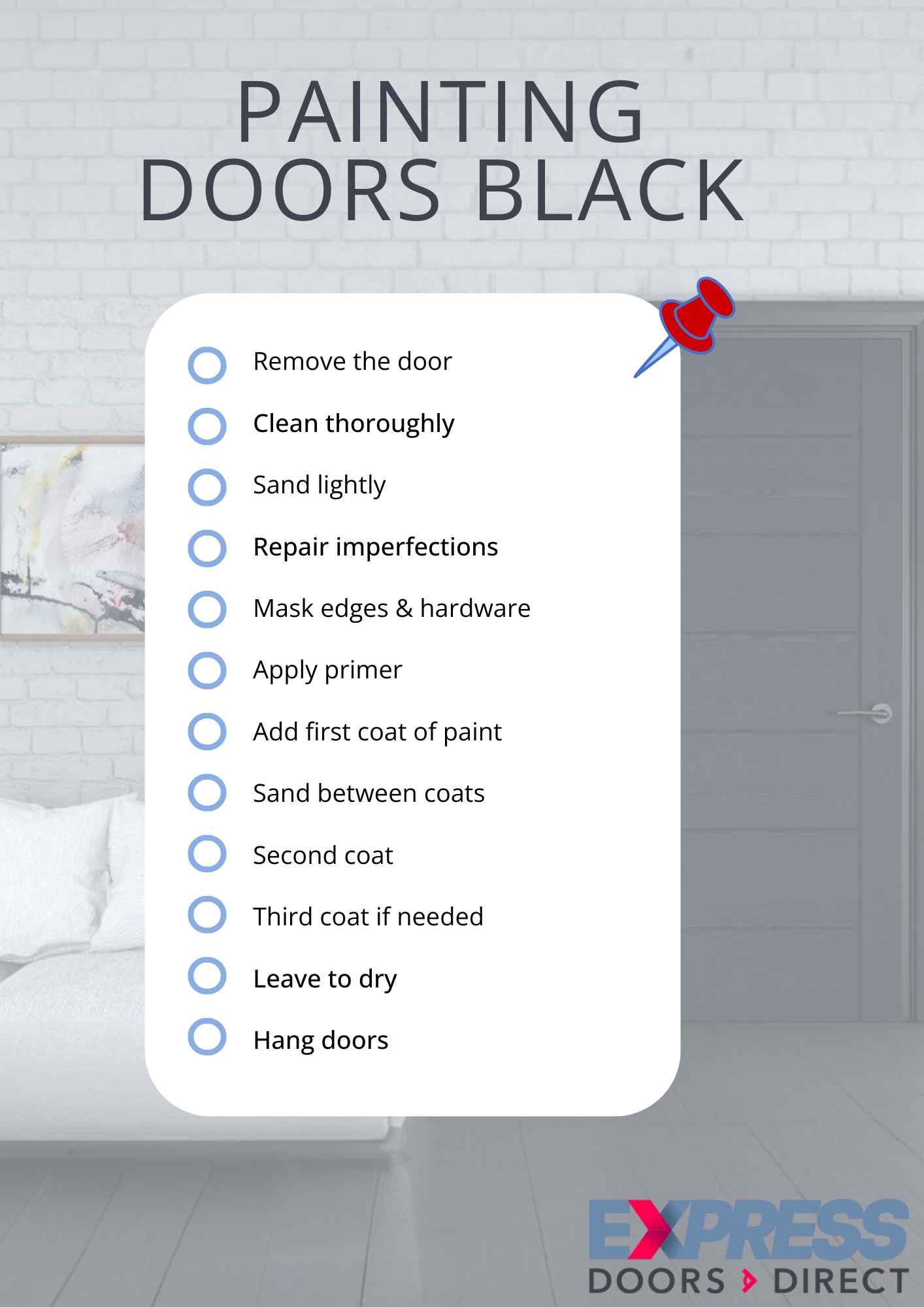
Step 1: Remove the door (optional but recommended)
You’ll get the cleanest finish if you take the door off its hinges and lay it flat across two trestles. If that’s not possible, wedge it open and protect the floor with dust sheets.
Step 2: Clean thoroughly
Wipe down the entire surface with sugar soap or mild detergent to remove grease, fingerprints, and dust. Black paint will highlight imperfections, so this step is vital.
Step 3: Sand lightly
Use fine sandpaper (120–240 grit) to scuff the surface. You don’t need to strip old paint completely, just create a slightly rough texture for primer to grip. Wipe away dust with a damp cloth.
Step 4: Repair imperfections
Fill dents or holes with wood filler. Once dry, sand smooth then wipe away any dust. Think of this like filling potholes before resurfacing a road, the smoother the base, the better the finish.
Step 5: Mask edges and hardware
Tape around hinges, handles (if you’ve left them on), and the edges where the door meets the frame.
Step 6: Apply primer
If you’re starting with a black primed door, you can skip this step. Otherwise, apply a thin, even coat of black primer. Let it dry fully, then sand lightly for smoothness.
Step 7: First coat of black paint
Use a brush for edges and panels, then a foam roller for larger areas. Paint both sides using thin coats. It’s better to build up depth gradually than overload the surface.
Step 8: Sand between coats
Once dry, give the door a gentle sand with very fine paper. This removes any dust or brush marks and ensures the next layer bonds perfectly.
Step 9: Second coat (and third, if needed)
Apply another thin coat. Black can sometimes need a third, depending on the base colour. Take your time, this is where patience pays off.
Step 10: Reattach and admire
Once the final coat is dry, remove masking tape, reattach the door, and stand back to appreciate the transformation.
Avoid these common mistakes
Take a look at this useful video by Hana’s DIY home before you start to avoid common mistakes and get a great finish:
Is it better to paint interior doors black gloss or satin?
The finish you choose makes just as much difference as the colour itself. Gloss offers a mirror-like shine that can look striking in the right setting, especially in period properties or very modern interiors. The downside is that gloss tends to highlight every fingerprint, scuff, or brush mark, so it needs regular upkeep.
Satin (or eggshell) has a softer sheen. It still reflects a touch of light, but it hides everyday marks more effectively and gives a smoother, more forgiving finish. That’s why satin has become the go-to choice for most interior doors. It feels modern, practical, and easier to live with, especially in busy family homes.
If you love drama and don’t mind extra maintenance, gloss could be your winner. But for a balance of style and durability, satin is usually the safer bet.
What colour black is best for interior doors?
It might sound simple, but not all black door paint is the same. Just like choosing the right shade of white, selecting the right black makes a huge difference.
- Pure black: This deep, true black creates maximum impact. It’s bold and works beautifully against crisp white walls or bright colour schemes.
- Soft black or charcoal: A slightly muted black has a gentler look. It’s easier to pair with earthy tones, natural wood, or softer interiors where a harsh contrast might feel too stark.
- Matte black: For ultra-modern spaces, matte blacks bring a sleek, architectural feel. They work particularly well on flush doors or minimalist designs.
When in doubt, test a sample first. Hold the painted swatch against your existing walls and flooring. Just as you’d try on a jacket before buying, checking the undertones of a black paint in your own light conditions ensures the result feels intentional rather than overwhelming.
Final thoughts
Painting interior doors black is one of those projects that delivers maximum impact for relatively little effort. With the right preparation and a methodical approach, you can achieve a finish that looks as though it came straight from a design magazine.
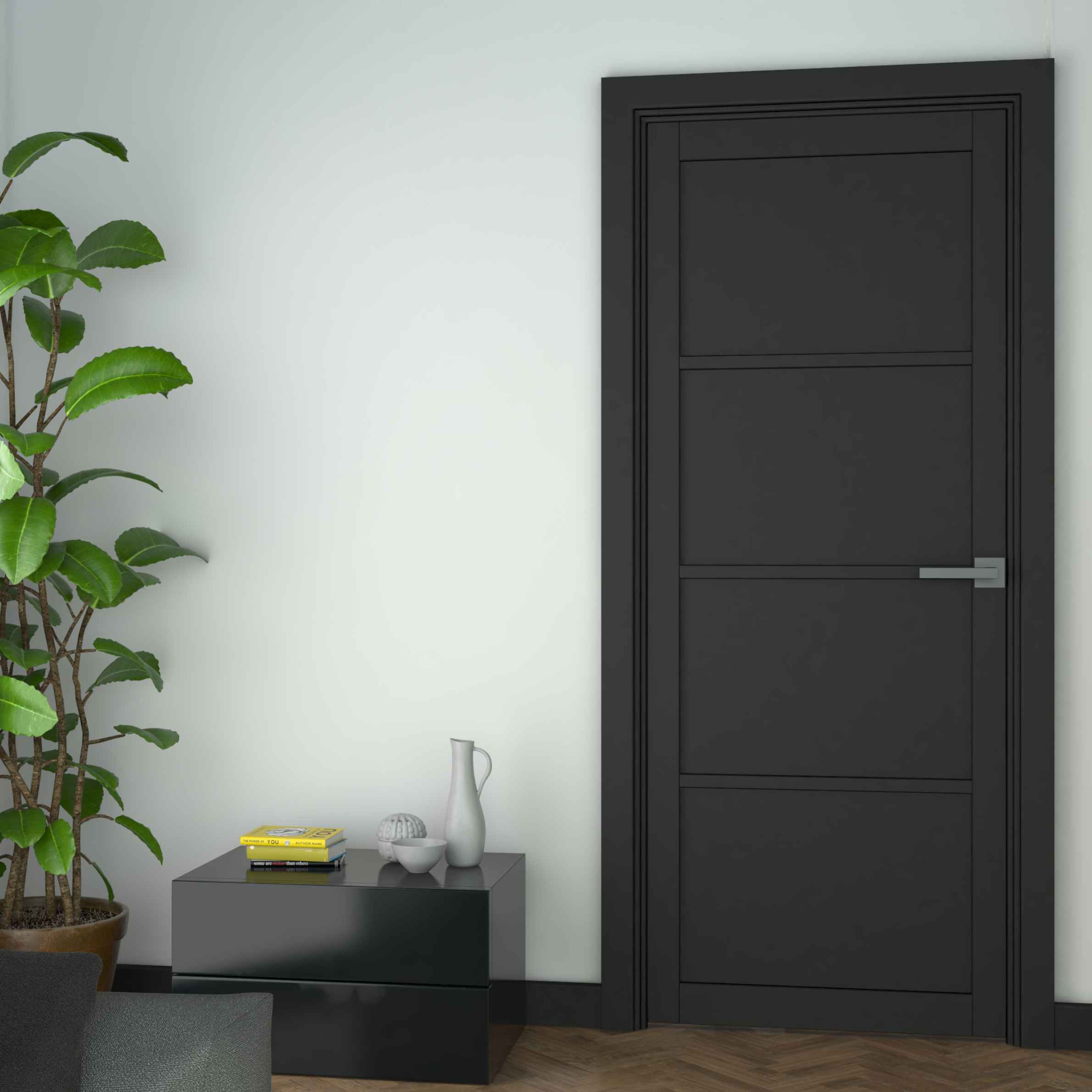
Whether you’re modernising a Victorian terrace, upgrading a new-build, or simply craving a touch of drama, black interior doors can bring both elegance and practicality to your home. And once you’ve done one, don’t be surprised if you find yourself eyeing up the rest of the house with paintbrush in hand.