





 Call us On
Solid Core vs Hollow Core Doors: What to Fit and Where
June 11, 2026Choosing solid core vs hollow core doors is one of those decisions that looks simple until you’re actually on the job.
The customer wants something that looks good. You need something that fits properly, suits the room, stays within budget and doesn’t come back to bite you later. That’s where the core matters.
A door’s core affects how it feels, how it handles, how much noise it blocks, how durable it is and whether it’s suitable for the space. Get it right and the job runs smoothly. Get it wrong and you can end up with dents, noise complaints, doors that feel cheap or a customer wondering why the “new doors” don’t feel much better than the old ones.
Choosing the right door for the job is important. In this guide we’re going to break down the real-world difference between solid core and hollow core doors, where each one works and what to fit depending on the job.
As Matt Shaw, Technical Director here at Express Doors Direct, explains:
“A door core isn’t just a technical detail. It changes how the door feels, how it performs and where it should be used. If the customer wants something that feels like a proper upgrade, the core is usually where that starts.”
Table of Contents:
What is a hollow core door?
What is a solid core door?
The Main Differences: Feel, Weight & Performance
Are hollow core doors any good?
Are solid core doors worth the extra money?
Where to Fit Hollow Core Doors
Where to Fit Solid Core Doors
Solid Core vs Hollow Core Doors for Sound Reduction
Solid Core vs Hollow Core Doors for Durability
Solid Core vs Hollow Core Doors for Fire Doors
Solid Core vs Hollow Core Doors for Bathrooms
Solid Core vs Hollow Core Doors for Bedrooms
Solid Core vs Hollow Core Doors for Home Offices
Solid Core vs Hollow Core Doors for Rental Properties
Solid Core vs Hollow Core Doors for Whole-House Replacements
What about semi-solid core doors?
Trimming: Check Before You Cut
Hinges and Hardware: Match The Weight
Finishing Options
Common Mistakes to Avoid
How to Explain the Difference to Customers
What Is a Hollow Core Door?
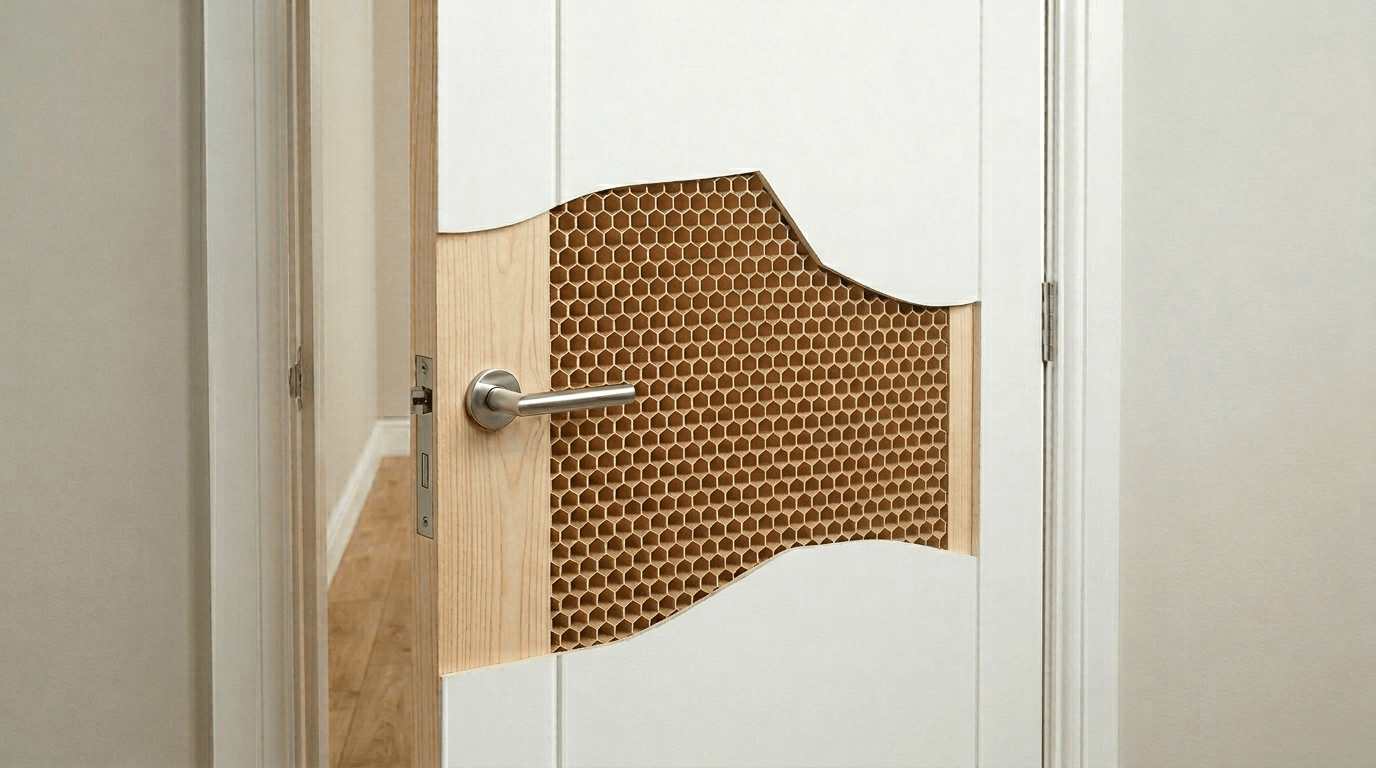
A hollow core door is a lightweight internal door with a hollow or semi-hollow centre, often supported by a honeycomb-style cardboard or lightweight internal structure with a solid timber lock block and frame. The outside faces are usually made from thin timber, MDF or moulded skins.
They’re designed to be affordable, easy to handle and quick to fit. That makes them useful on certain jobs, especially where budget and speed matter.
A hollow core door is not automatically a bad door as some people might think. It just has a specific place. Problems usually start when it’s fitted somewhere the customer expects more strength, more sound reduction or a more premium feel.
In practice, hollow core doors are best for low-traffic areas, cupboards, utility spaces, budget refurbs and quick rental refreshes. They’re less suitable for busy family homes, home offices, bedrooms where privacy matters, or anywhere the customer has asked for a “solid” upgrade.
What Is a Solid Core Door?
A solid core door has a dense internal core, often made from engineered timber, particleboard, MDF or another composite material that’s then reinforced with a solid timber frame and real wood veneer. This gives the door more weight and substance than a hollow core alternative.
That extra density is the key difference. It helps the door feel more solid, improves durability and gives better sound reduction. Solid core doors are widely recognised as offering better sound and heat insulation than hollow core doors because of their added density and weight.
Solid core doors cost more, and they’re heavier to move and hang, but they’re usually the right call where the customer wants a better finish, more privacy or a door that feels like a proper upgrade.
They work well in bedrooms, living rooms, home offices, family homes, higher-spec renovations and whole-house replacements where consistency matters.
The Main Difference: Feel, Weight and Performance
The easiest way to explain it to a customer is this… hollow core doors are lighter and cheaper, solid core doors feel stronger and perform better.
A hollow core door will do the basic job of closing off a room. A solid core door does that while also feeling more substantial, reducing more noise and standing up better to daily knocks.
That doesn’t mean every internal door needs to be solid core, though. On a tight-budget refurb, fitting solid core doors throughout might not make much sense. But in the rooms people use most or in a home where the customer is all about long term quality, solid core is usually the better recommendation.
Matt puts it simply:
“If it’s a cupboard or a low-use room, hollow core can make sense. If it’s a bedroom, office, hallway or main living area, solid core is usually the safer bet.”
Are Hollow Core Doors Any Good?
Yes, when they’re used in the right place.
Hollow core doors are good for jobs where cost, speed and light handling matter more than acoustic performance or durability. They’re easier to carry through a property, easier to hang because of the reduced weight and usually a fair amount cheaper to buy.
That makes them especially useful for landlords, quick turnaround jobs and rooms where the door won’t take much abuse.
Where hollow core doors struggle is impact resistance and sound reduction. They can feel flimsy compared with solid core options and are more likely to dent or damage if they’re knocked. If the customer is replacing poor-quality doors because the house feels cheap or noisy, fitting another lightweight door probably won’t solve the problem.
Are hollow core doors worth fitting?
Yes, for low-traffic, budget-sensitive internal spaces. No, if the customer expects better sound reduction, durability or a more premium feel.
What’s the cost difference between hollow core and solid core doors?
In the UK, the average cost difference is usually around £80-£200 more per door for solid core compared with hollow core, depending on style, finish, brand and size.
Some trade door suppliers list basic hollow core doors from around £40-£50, while mid-range solid core doors often start closer to £100-£120 and can run much higher for oak, prefinished, glazed or fire-rated options.
Fitting costs can vary too. As a rough guide, a client can expect a solid core door to cost around £50 more per door to fit on average than a hollow core door, assuming it’s a standard like-for-like replacement into an existing frame.
Some tradies put internal door fitting costs anywhere from £40-£150 per door, with broader estimates reaching £100-£350 per door depending on the job, hardware and complexity.
What affects fitting cost more than the core?
The biggest cost movers are usually:
- Poor or twisted existing frames
- Extra trimming or planing
- Fitting new handles, latches and hinges
- Removing and disposing of old doors
- Fire door requirements
- Glazed or oversized doors
- Regional labour rates
Fire doors are usually a whole separate conversation too because fitting needs to be more precise and labour can sit closer to £150-£250 per door depending on the setup.
It’s important customers know how much the entire replacement will cost, not just the door itself, especially if replacing doors throughout an entire property. On a straightforward like-for-like swap, the difference may be small, but on a full house, heavy doors or awkward frames, it soon adds up.

Are Solid Core Doors Worth the Extra Money?
For most quality-focused residential jobs, yes.
They give the customer that more substantial feel when the door opens and closes, which often matters more than they realise.
This is especially true if the existing doors are lightweight hollow core doors. Replacing them with solid core alternatives can make the whole property feel better built, even if the style is fairly simple.
The only real downsides are higher cost, extra weight and the need for suitable hinges and careful fitting. But on the right job, those are manageable.
Where to Fit Hollow Core Doors
Hollow core doors work best when the door is not expected to do heavy lifting, literally or practically.
They’re a decent choice for cupboards, understairs storage, airing cupboards, occasional-use rooms and low-budget rental refreshes. They can also suit quick cosmetic upgrades where the customer wants a cleaner look but isn’t expecting a high-spec finish.
They’re not ideal for rooms where noise, privacy or durability matter.
For example, fitting a hollow core door to a home office might save money upfront, but if the customer works from home and can hear every kettle boil, dog bark and delivery knock, they won’t thank you for it. Same goes for bedrooms in busy family homes.
If budget is tight, a sensible approach would be to use hollow core doors in secondary areas and spend more on solid core doors where they’ll be noticed and used most. Most decent door ranges will offer both hollow and solid core options, so mixing and matching won’t be super obvious.
Where to Fit Solid Core Doors
Solid core doors are best used where performance matters. They’re worth considering for:
- Bedrooms: because privacy and noise reduction matter.
- Home offices: because household noise is a real issue.
- Living rooms: because the door gets frequent use.
- Hallways: because doors here are seen and used constantly.
- Rental properties: because durability can actually reduce damage and ongoing costs.
- Higher-spec refurbishments: because the finish needs to feel like an upgrade.
Bedrooms are an obvious one. A solid core door gives better privacy and helps cut down everyday noise from hallways, landings and other rooms.
Home offices are another strong fit. More people are working from home than ever, and a door that shuts properly and reduces noise can make a real difference.
Living rooms and snug areas also benefit from solid core construction, especially in open-plan or semi-open-plan homes where the customer wants the option to close a room off properly.
Hallways and landings are worth considering too. These doors are used daily and seen from multiple angles. A solid core door here can make the whole property feel more substantial.
For full-house refurbishments, solid core doors can create a consistent, higher-quality feel from room to room. That’s useful when the customer is spending money elsewhere and wants the doors to match the standard of the rest of the house.
Solid Core vs Hollow Core for Sound Reduction
We’ve already mentioned it a few times, but if the customer mentions noise, go solid core.
A hollow core door will block some sound simply because it closes the opening, but it won’t perform anywhere near as well as a denser door. Solid core doors reduce sound better because the extra mass helps limit sound transfer.
As a rough guide, a solid core internal door can reduce sound transfer by around 5-10 dB more than a hollow core door. That might not sound like a lot, but in real world terms, a normal conversation is roughly 60 dB where as a vacuum cleaner is roughly 70 dB, so 10db can actually feel quite substantial. It won’t make a room soundproof, but it can make a noticeable difference, especially when the frame, latch and gaps are dealt with properly too.
The door leaf is only part of the job and one important caveat is that gaps matter massively. A solid core door with a big gap underneath or poor seals can still let a lot of noise through. For proper sound control, the door leaf, frame, seals and threshold all need looking at together.
If a customer is expecting serious acoustic performance, they may need acoustic door seals adding or proper acoustic doors, not just a standard solid core door.
For normal domestic use though, a regular solid core door is usually enough to make a noticeable difference.
Are solid core doors soundproof?
Not fully. Solid core doors reduce sound better than hollow core doors, but they are not the same as specialist acoustic doors. The frame, gaps and seals also affect the result.
Solid Core vs Hollow Core for Durability
Durability is another clear difference.
Hollow core doors are lighter and more affordable, but they’re more vulnerable to dents, knocks and impact damage, they can’t be repaired once the surface is damaged either, it would be a case of replacing the door. In a quiet spare room, that may not matter. In a hallway with kids, pets, moving furniture and daily traffic, it probably will.
This is where it helps to think about the customer’s use, not just the room name. A spare bedroom in one house might barely be used. In another, it might be a teenager’s gaming cave, study room and laundry dumping ground. Same room on paper, different door requirement.
Solid core doors can take more abuse. They feel sturdier, resist damage better and are usually the better fit for family homes and refurbs where the doors need to last.

Solid Core vs Hollow Core for Fire Doors
This is where you need to be careful. It might seem obvious but hollowcore doors are not fire resistant and while all internal fire doors have a solid core, not all solid core doors are automatically a fire door.
A fire door must be tested and certified as a complete fire-resisting product and it needs to be installed with compatible components.
If you’re not familiar with fitting fire doors, Approved Document B provides statutory guidance on fire safety for buildings in England, including dwellings, flats and other building types. Fire door needs depend on the building, layout and the work being carried out.
Many FD30 internal fire doors use solid core construction because they need the density and performance required to resist fire for the tested period. But that does not mean any heavy solid door can be treated as fire-rated, the core is constructed differently with different components.
If the job needs a fire door, check:
- The fire rating, usually FD30 or FD60.
- The frame or lining requirements.
- Intumescent strip and smoke seal requirements.
- Fire-rated hinge requirements.
- Latch, lock and closer requirements.
- Manufacturer fitting instructions.
Matt says:
“Don’t sell or fit a standard solid core door as a fire door. If the job needs FD30, use an FD30-rated door and the correct hardware. The certificate matters as much as the weight.”
Solid Core vs Hollow Core for Bathrooms
Both can be used, but finish matters.
Bathrooms create a lot of moisture, and moisture can affect timber doors if they’re not sealed properly. A hollow core door may be fine for a basic bathroom in a budget job, but it needs correct finishing. A solid core door gives a better feel and improved privacy, but it also needs sealing on all edges if supplied unfinished or primed.
Prefinished doors can be useful here because the finish is already applied in controlled factory conditions. Even then, any trimming or exposed edges should be finished as recommended by the manufacturer, because the last thing you want is a door that starts to rot from the inside out.
For bathrooms, don’t just ask hollow or solid. Ask whether the customer wants privacy, whether moisture is likely to be high and whether the door will be properly finished.
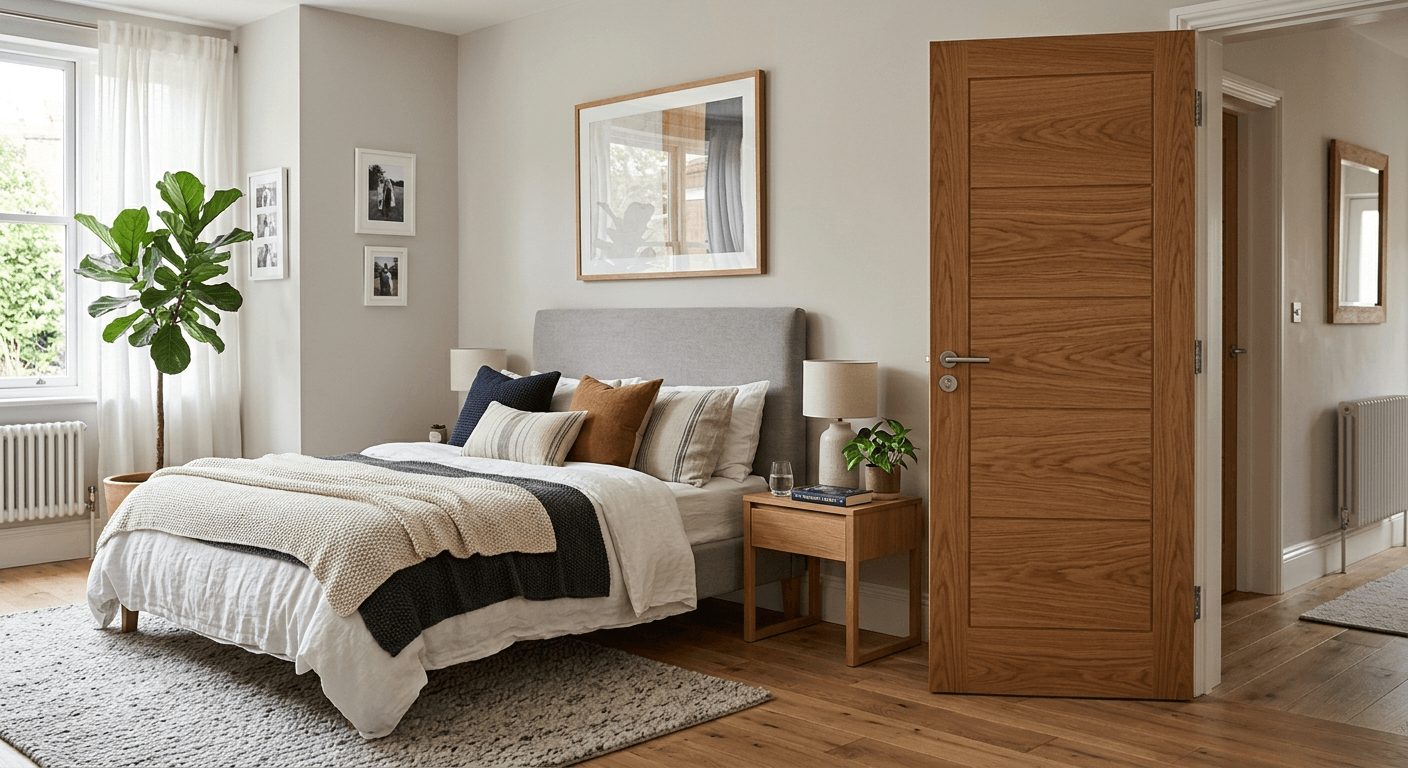
Solid Core vs Hollow Core for Bedrooms
Bedrooms are one of the easiest calls.
If the customer can afford it, solid core is the better option. As we’ve mentioned before, they easily give more privacy, better noise reduction and a more substantial feel. That matters in family homes, shared houses and homes with bedrooms near living spaces.
Hollow core can be used for budget jobs, especially in spare bedrooms or rental refreshes. But if the customer is already upgrading the house and wants the rooms to feel calmer and better finished, solid core is the one to recommend.
Solid Core vs Hollow Core for Home Offices
For home offices, solid core wins most of the time.
A home office needs to feel separate from the rest of the house. Even a basic solid core door can help reduce everyday noise better than a hollow core option. That makes calls, focus work and privacy easier.
If the customer wants light as well as quiet, a glazed solid core door or acoustic-rated option may be worth considering. Just be clear that standard glazed doors may not reduce sound as well as a fully solid door unless they are designed for acoustic performance.
Hollow core doors can work for a casual study space, but if the room is used every day for work, they can feel like the cheap choice very quickly.
Solid Core vs Hollow Core for Rental Properties
This all depends on the type of rental.
For a low-cost refresh where the aim is to tidy up the property before new tenants move in, hollow core doors may do the job. They keep costs down and are easy to replace if damaged.
For better rentals, HMOs or long-term lets, solid core doors are usually worth considering. They are more durable, reduce noise better and feel more robust. In shared accommodation, fire door requirements may also come into play, so always check the property type and compliance requirements before ordering.
Landlords often care about margin, but they also care about repeat maintenance. A cheaper door that needs replacing sooner may not save much in the long run.
Solid Core vs Hollow Core for Whole-House Replacements
For whole-house replacements, consistency matters.
A property with matching solid core doors throughout will usually feel more finished than one with a mix of lightweight doors in different styles. That said, you don’t always need to fit solid core everywhere.
A practical split can work well. Fit solid core doors to bedrooms, living spaces, offices and high-use rooms, then use hollow core doors for cupboards or low-use areas if the budget is tight.
The key is making sure the style, finish and ironmongery still match. Customers notice mismatched doors, even if they don’t know why the house feels off.
What About Semi-Solid Core Doors?
Semi-solid doors sit between hollow core and solid core. They offer more structure than a hollow core door but are usually lighter and more affordable than a full solid core option.
They can be useful when the customer wants something better than the cheapest hollow core door but doesn’t want to pay for solid core throughout.
In simple terms, semi-solid can be an excellent middle-ground choice. Better feel than hollow core, less cost and weight than solid core, but not quite the same performance and refinement as a true solid core door.
Trimming: Check Before You Cut
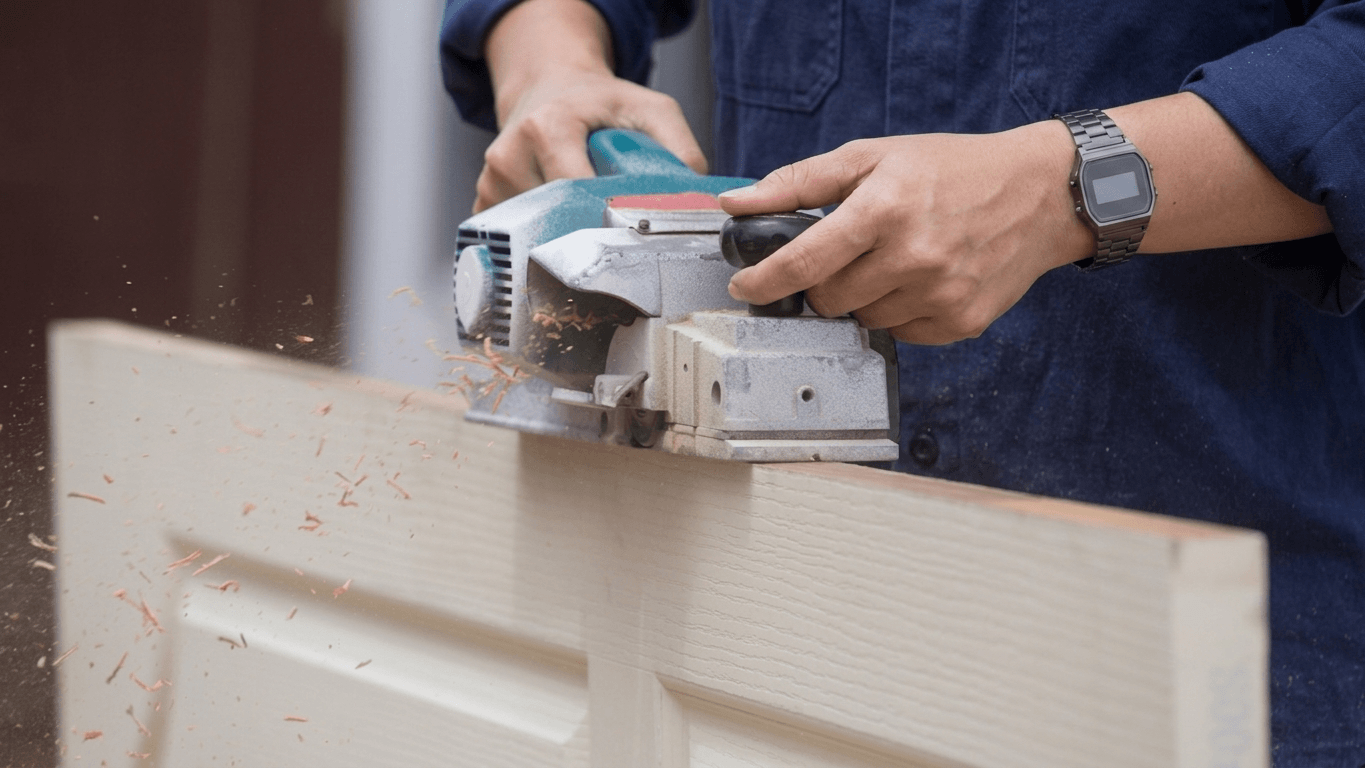
Core types really matter when trimming.
Many doors have lippings around the edges that allow some trimming and the amount varies by product. It really matters that you stick to the limits given.
With hollow core doors, trimming too much can expose the internal structure and weaken the edge, if that happens, unfortunately the door is finished and will need to be replaced. With solid core doors, you may have more substance to work with, but you still need to follow the stated trimming allowance because going too far can expose the engineered core, and while you’ll still have the stability in the door, it will leave it prone to moisture ingress which can cause warping and the veneer to peel.
With fire doors, trimming beyond the permitted amount will affect certification and completely void any fire safety standards.
Do not guess. Check the product details before ordering and again before cutting.
Matt explains:
“The trimming allowance is there for a reason. If you need to take more off than the door allows, don’t force it. Sort the opening, choose another size or look at a made-to-measure option.”
Can hollow core doors be trimmed?
Yes, but only within the manufacturer’s stated trimming allowance. Hollow core doors have limited solid material around the edges, so taking too much off can damage the door and will void any warranties.
Hinges and Hardware: Match the Weight
Solid core doors are much heavier than hollowcore doors, so hardware matters.
A lightweight hollow core door may only need standard internal hinges, depending on the size and situation. A heavier solid core door may need stronger hinges, and fire doors need suitable fire-rated hinges fitted correctly.
Door weight also affects how the door feels in use. If the hinges are poor quality or incorrectly fitted, even a good door can sag, bind or feel wrong.
For heavier doors, check the hinge grade, door thickness, frame condition and screw fixing. If the frame is weak, old or damaged, you need to deal with that before hanging a heavier door.
Finish Options: Hollow and Solid Both Need the Right Finish
Core type is only one part of the decision. Finish affects labour, speed and customer satisfaction.
Unfinished doors give flexibility, but they need finishing properly to stand the test of time. That means sealing all faces and edges as required, especially in moisture-prone areas.
Primed doors remove the need to prep the surface and are ready for final painting, they’re not ready to leave as they are. Make sure the customer understands that.
Fully finished doors save time and give a more consistent result across multiple doors. They’re often a good recommendation where speed matters or where the customer wants less mess on site, they do cost more initially, but what’s spent on the doors is usually saved on installation.
Common Mistakes to Avoid
The first mistake is assuming “internal door” tells you enough. It doesn’t. A cupboard door and a home office door do different jobs.
The second is promising sound reduction from a hollow core door. It may close off the room, but it won’t give the same level of privacy as a solid core option.
The third is treating a heavy door as fire-rated just because it feels substantial. Fire performance comes from testing and certification, not guesswork.
Another common problem is ignoring trimming limits. This is especially risky with hollow core doors and fire doors. Once you cut beyond what the door allows, you can’t put the performance back in.
Finally, don’t forget the frame. A solid core door fitted into a poor lining can still feel wrong and will ultimately cause issues which can void the warranty of a door. Check the opening before blaming the door.
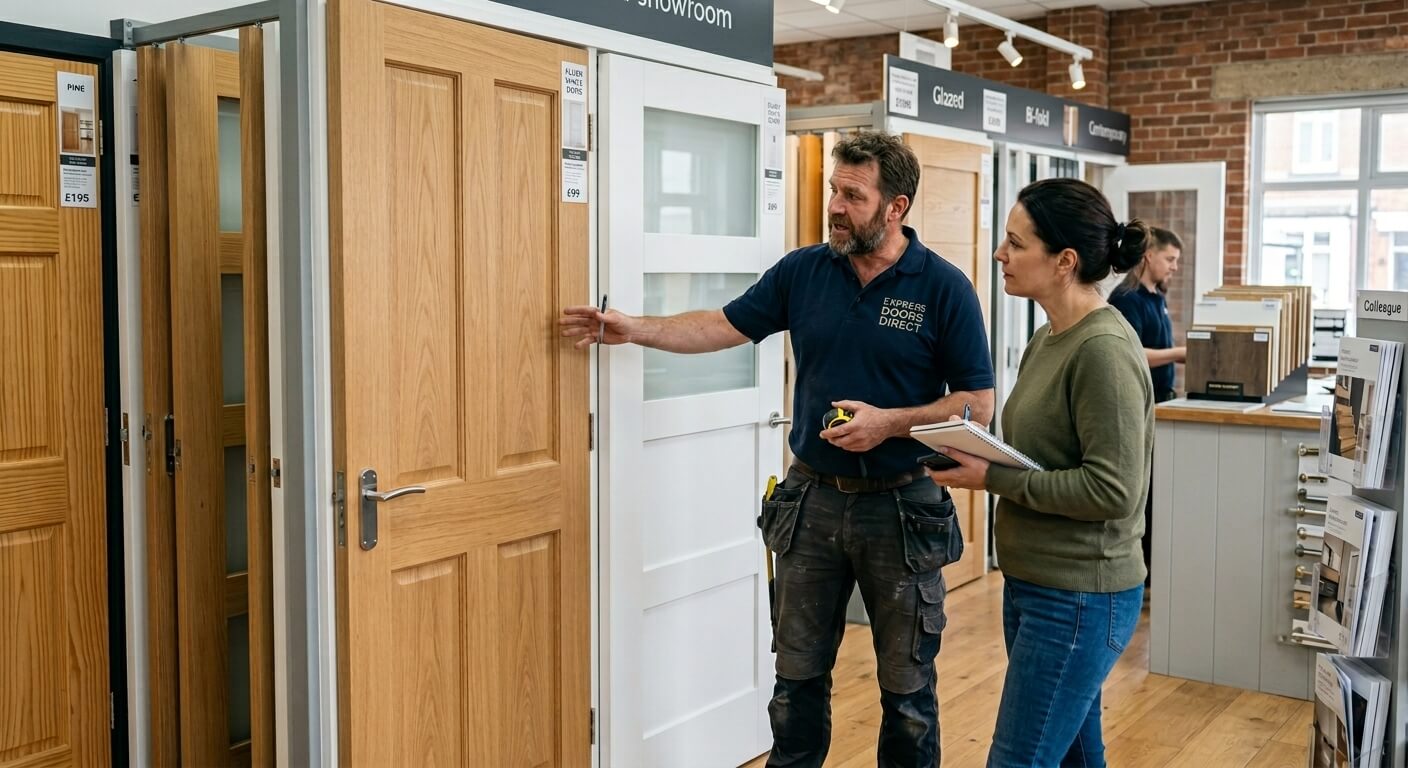
How to Explain the Difference to Customers
Customers don’t always care about the technical details. They care about what they’ll notice.
A simple explanation works best:
A hollow core door is lighter and cheaper, so it’s fine for low-use rooms or budget jobs. A solid core door costs more, but it feels stronger, reduces noise better and is usually a better choice for bedrooms, offices and busy areas.
That’s enough for most customers. It explains the difference without turning the conversation into a lecture.
If they’re still unsure, ask what matters most: price, feel, noise, durability or speed. Their answer usually tells you which way to go.
Fit the Door to the Job
Solid core and hollow core doors both have a place.
Hollow core doors are useful when you need a cost-effective, lightweight option for low-use areas. Solid core doors are the better choice when the customer wants strength, privacy, sound reduction and a more substantial finish.
The trick is not to overspec every job, but not to underspec the rooms that matter either.
As Matt says:
“You don’t need to fit the most expensive door everywhere. You just need to fit the right door in the right place. That’s what keeps the job clean and the customer happy.”
For trades, that’s the decision that matters. Fit what works, explain it clearly and avoid the callback.